
Joint Research - Policy Brief on Beneficial Ownership FMOJ and IBLF Global Final
This Policy Brief, co-authored by the Federal Ministry of Justice (FMOJ) and IBLF Global in February 2017, documents a study visit by Nigerian officials to the UK to gather best practices on implementing a Beneficial Ownership (BO) regime.
The report stresses that BO transparency is crucial for improving Nigeria's business environment, fighting corruption, and attracting foreign investment. It outlines the complexity of establishing a central BO register by reviewing the UK’s experience with its Persons with Significant Control (PSC) register, noting challenges like data quality and scope limitations. The brief concludes that successful implementation in Nigeria, requiring multidisciplinary efforts, is key to rebuilding global investor confidence.
SPECIAL OPERATION PROCEDURE (SOP) FOR EFFICIENT RECOVERY OF STOLEN ASSETS
The Special Operation Procedures (SOP) were developed by the Asset Recovery and Management Unit (ARMU) of the Federal Ministry of Justice (FMOJ) in collaboration with the African Center for Governance, Asset Recovery and Sustainable Development for officers working in ARMU and other relevant departments.
The purpose of the SOP is to ensure the efficient recovery of stolen assets. It sets out the asset recovery process, breaking it down into practical and manageable guidelines. It aims to assist asset recovery practitioners in Nigeria in planning each step of the asset recovery and management process.
ASSET RECOVERY AND MANAGEMENT MANUAL
The Asset Recovery and Management Manual (the Manual) is a comprehensive guide developed by the Asset Recovery and Management Unit (ARMU) of the Federal Ministry of Justice, in collaboration with the African Center for Governance, Asset Recovery, and Sustainable Development, to support the effective implementation of Nigeria's Proceeds of Crime (Recovery and Management) Act 2022 (POCA). It provides a practical and simplified overview of the Federal Government’s legal framework for the recovery, management, return and use of proceeds of crime.
Guideline For Civil Society Organizations In the Management and Monitoring of Proceeds of Crime
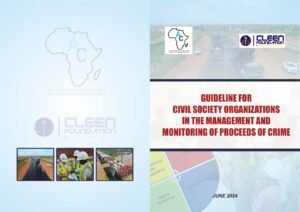
The Guideline for Civil Society Organizations in the Management and Monitoring of Proceeds of Crime is a guide for Civil Society Organizations (CSOs) to monitor and manage proceeds of crime. It draws on CLEEN Foundation's monitoring experience under the 2020 Trilateral Asset Return Agreement to provide insights and lessons acquired from the agreement's implementation. It covers international, regional, and domestic legal mandates for CSO participation, engagement strategies and best practices for transparent and accountable management while contributing to Sustainable Development Goals, particularly 16.4 and 16.5.
RFP FOR THE WEB DESIGN AND DEVELOPMENT CONSULTANT FOR THE NBA-AML COMMITTEE
Compendium on Lessons Learned and Best Practices from Nigeria's Anti-Corruption Efforts: 2015 TO 2023
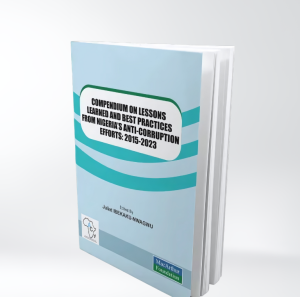
This Compendium is a response to a call to fill the knowledge gap. It represents a crucial milestone in documenting and distilling the lessons learned and best practices from Nigeria's anti-corruption efforts from 2015 to 2023. The lessons learned, best practices, and recommendations highlighted in this compendium offer invaluable guidance to policymakers, practitioners, civil society organizations, and citizens alike, providing a roadmap for future endeavours and offering practical solutions to complex challenges.
Guideline For Civil Society Organizations In the Management and Monitoring of Proceeds of Crime
The Guideline for Civil Society Organizations in the Management and Monitoring of Proceeds of Crime is a guide for Civil Society Organizations (CSOs) to monitor and manage proceeds of crime. It draws on CLEEN Foundation's monitoring experience under the 2020 Trilateral Asset Return Agreement to provide insights and lessons acquired from the agreement's implementation. It covers international, regional, and domestic legal mandates for CSO participation, engagement strategies and best practices for transparent and accountable management while contributing to Sustainable Development Goals, particularly 16.4 and 16.5.