
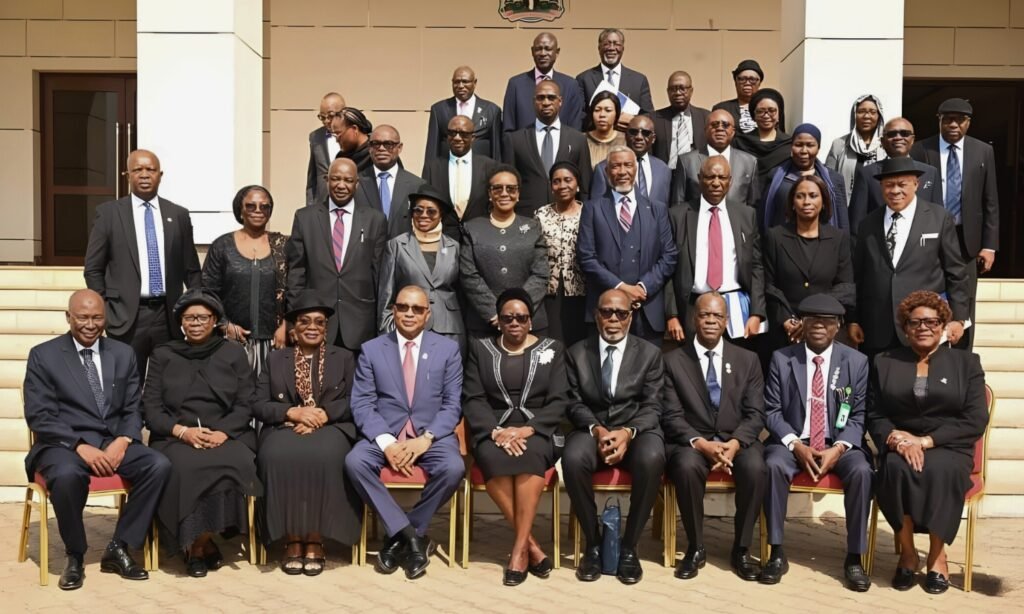
The Chief Justice of Nigeria (CJN), Justice Kudirat M. O. Kekere-Ekun, has urged judicial officers to ensure the effective and principled implementation of the Proceeds of Crime (Recovery and Management) Act (POCA) 2022, as a two-day high-level judicial training on asset confiscation and management concluded in Abuja.
The training, held from 26–27 January 2026 at the National Judicial Institute (NJI) and convened by the African Center for Governance, Asset Recovery and Sustainable Development in partnership with the NJI, and the Federal Ministry of Justice brought together the leadership of the courts including chief judges and more than forty (40) judgees of the Federal High Court, State High Courts, and the Court of Appeal. It focused on strengthening judicial capacity in asset recovery, confiscation, and post-confiscation management under POCA, while safeguarding constitutional rights and due process.
In her keynote address, the CJN emphasized the judiciary’s central role across the entire asset recovery lifecycle, warning that public confidence in POCA depends on transparent, fair, and proportionate judicial decision-making. The Administrator of the NJI, Hon. Justice Babatunde A. Adejumo, highlighted that POCA consolidates previously fragmented asset recovery regimes, placing increased responsibility on courts to ensure coherence and credibility in forfeiture decisions.
Supported by the UK Foreign, Commonwealth and Development Office (FCDO) under their project titled, “Tackling Illicit Financial Flows through Asset Recovery and Management and Countering Money Laundering, Terrorism Financing and Proliferation Financing in Nigeria,” the training examined key POCA innovations, including conviction-based and non-conviction-based forfeiture, interim measures, evidentiary standards, and judicial oversight of asset management to prevent waste and abuse. Technical sessions and discussions stressed the need to balance asset recovery objectives with the protection of innocent third-party interests and the Constitutional presumption of innocence.
Through peer-learning exchanges, participants shared practical experiences and identified challenges such as procedural coordination, service of interim orders, and post-forfeiture asset management. The programme concluded with a call for judges to apply POCA with integrity, consistency, and diligence, and for training materials to be shared widely to strengthen institutional learning.
The African Center expressed appreciation to partners and reaffirmed its commitment to supporting judicial institutions in combating illicit financial flows, strengthening asset recovery frameworks, and promoting transparency, accountability, and the rule of law.