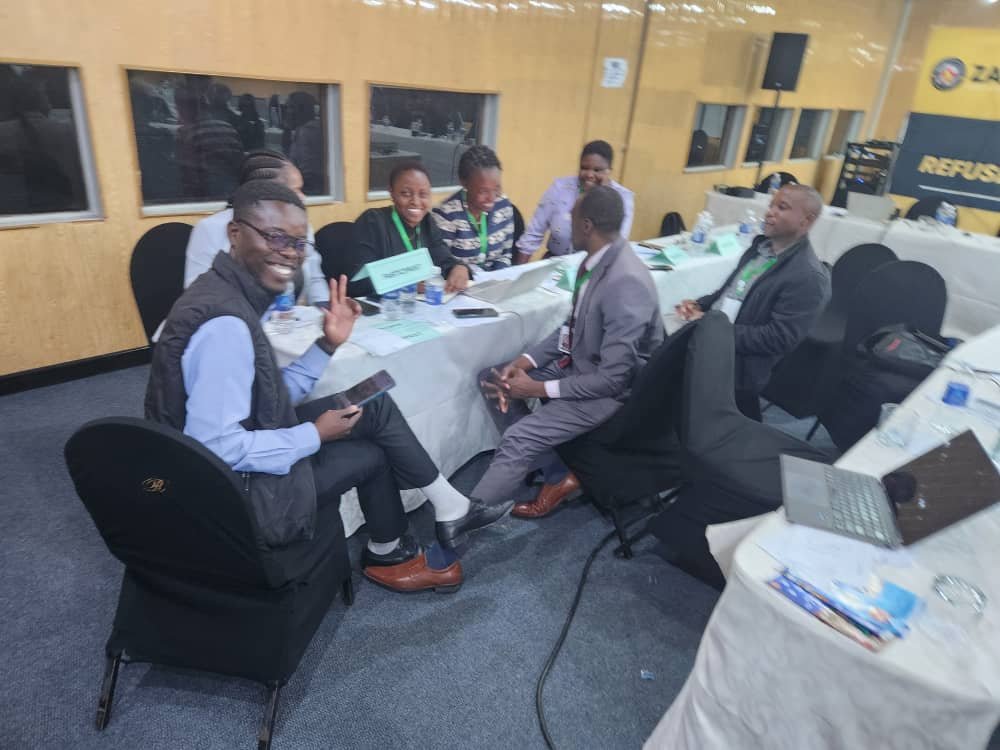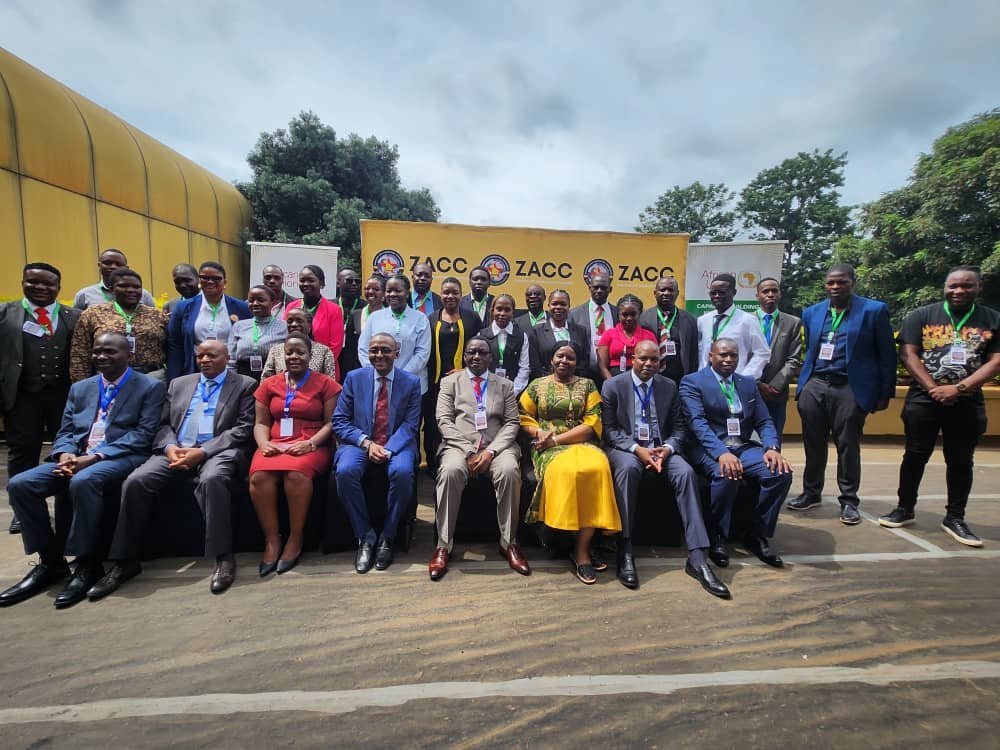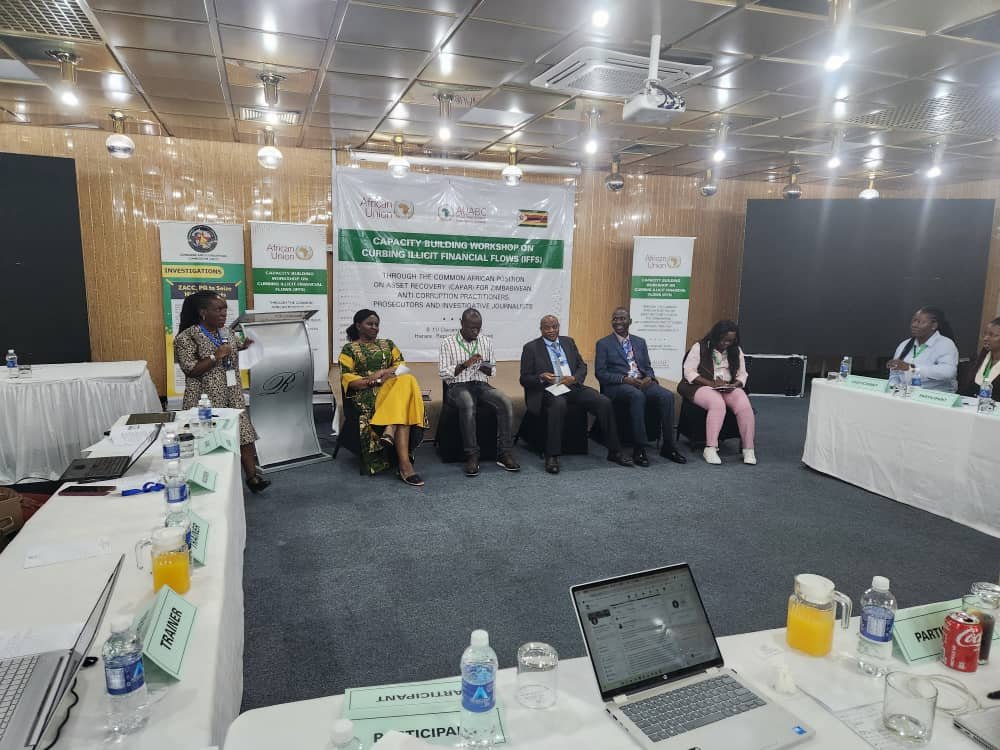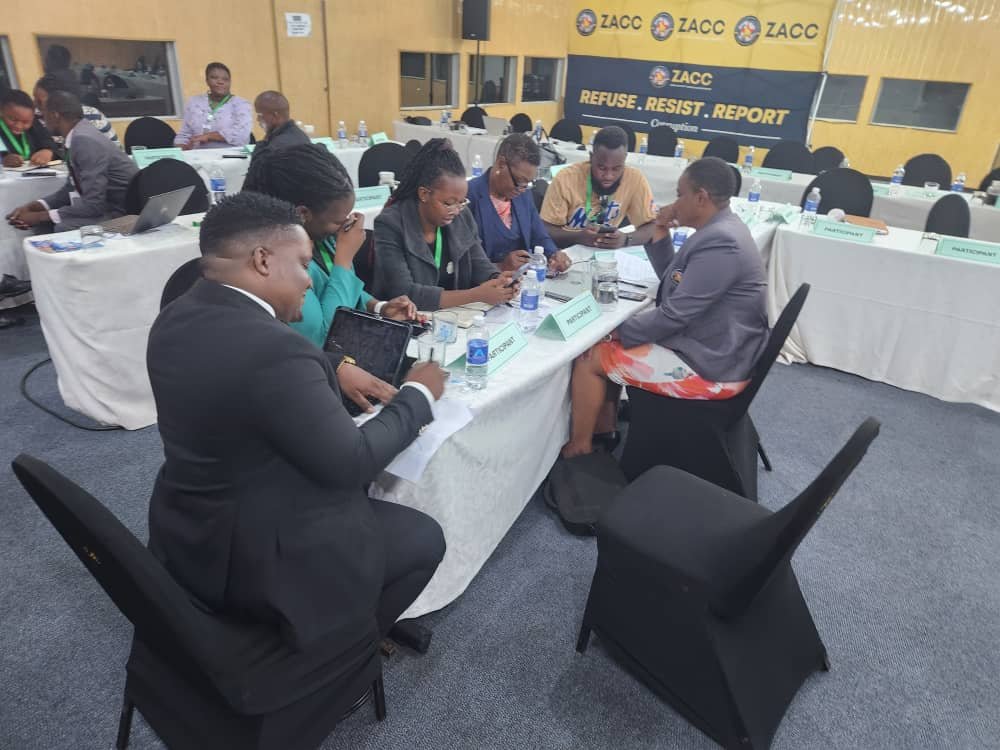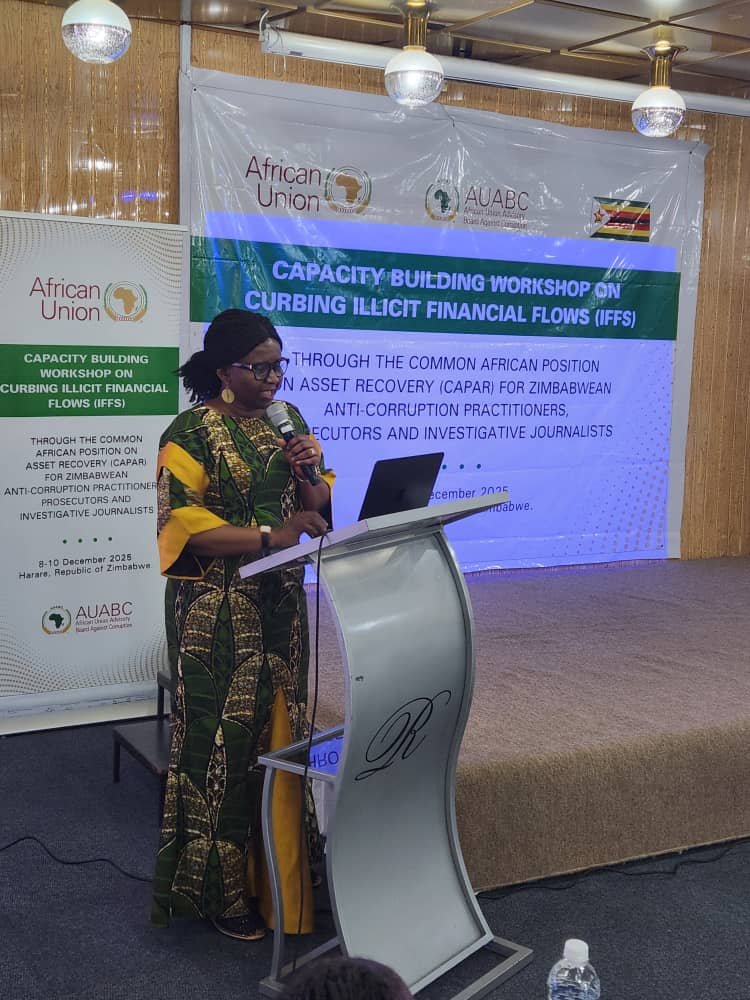
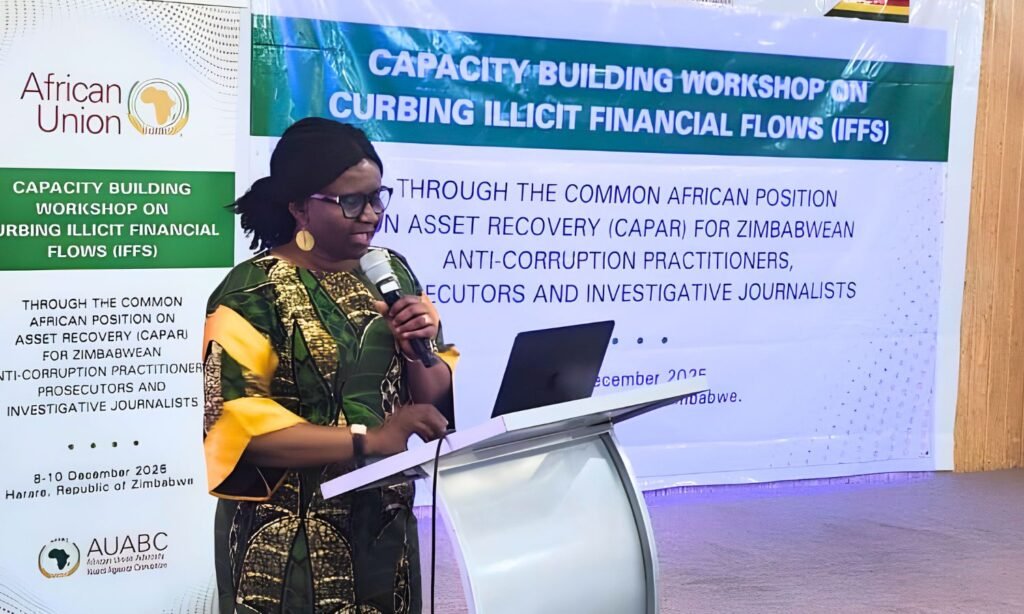
Harare, Zimbabwe — The African Center for Governance, Asset Recovery and Sustainable Development played a prominent role at a three-day Capacity-Building Workshop on Curbing Illicit Financial Flows (IFFs) hosted by the African Union Advisory Board against Corruption (AUABC) in Harare, where the Center’s Executive Director, Madam Juliet Ibekaku-Nwagwu, championed a stronger, coordinated African response to illicit financial flows and asset recovery.
The workshop, held under the framework of the Common African Position on Asset Recovery (CAPAR), convened prosecutors, journalists, anti-corruption agencies, AU representatives, and civil society actors to strengthen technical skills and reinforce collaboration across the investigative and asset recovery chain.
Madam Ibekaku-Nwagwu delivered a compelling keynote address on Day 1, underscoring the urgent need for African governments and institutions to confront the scale of IFFs draining national resources. She noted that without stronger investigative systems, improved inter-agency coordination, and alignment with CAPAR, African countries will continue to face significant barriers to tracing and returning stolen public assets.
Over the three days, she led technical sessions on investigative journalism as a strategic tool against IFFs, emphasising the need for data-driven methodologies, cross-border collaboration, and journalist protection frameworks that enable reporters to investigate corruption cases safely and effectively. She further contributed to high-level action-planning discussions focused on improving national and regional mechanisms for asset recovery.
Throughout the workshop, Madam Ibekaku-Nwagwu engaged stakeholders on concrete strategies to enhance Africa’s investigative and prosecutorial capabilities. She highlighted practical approaches to tracing illicit assets, documenting evidence, and strengthening cooperation between governments, oversight institutions, and the media. According to her, Africa’s progress on asset recovery will depend on empowering investigators and journalists, improving information-sharing, and institutionalising reforms in line with CAPAR.
The workshop concluded with a collective commitment by AUABC, participating institutions, and regional experts to develop actionable frameworks that strengthen investigative methods, promote journalist safety, and establish coordinated follow-up mechanisms for implementing asset recovery recommendations across the continent.
About the Workshop
The AUABC-organized workshop forms part of broader continental efforts to operationalize CAPAR and equip national actors with the skills, tools, and networks required to respond to increasingly complex financial crimes. CAPAR—adopted by African Union Heads of State in 2020, sets out a coordinated approach for identifying, tracing, recovering, returning, and managing Africa’s stolen assets. The Harare workshop advanced this agenda by strengthening both technical capacity and multi-stakeholder collaboration.
The three-day training included structured sessions on:
- Investigative journalism as a frontline tool for uncovering corruption and illicit financial flows.
- OSINT (Open-Source Intelligence) tools used in financial investigations.
- Whistleblower protection frameworks that enable secure reporting of wrongdoing.
- Beneficial ownership data and methods for uncovering hidden asset holders.
- Multi-stakeholder collaboration across government, media, civil society, and regional bodies.
These sessions provided participants with the skills to identify illicit financial activities, assess and document evidence, engage in cross-border information-sharing, and support prosecutorial and recovery processes.
Across engagements with prosecutors, journalists, anti-corruption practitioners, AU representatives, and civil society actors, Madam Ibekaku-Nwagwu reinforced the need for integrated investigative approaches that combine legal expertise, data analytics, journalistic inquiry, and international cooperation.
The workshop closed with a collective commitment to develop concrete national and regional pathways for implementing CAPAR. These commitments include strengthening investigative methods, enhancing journalist and whistleblower protection mechanisms, and establishing coordinated follow-up structures to monitor progress on asset recovery recommendations.