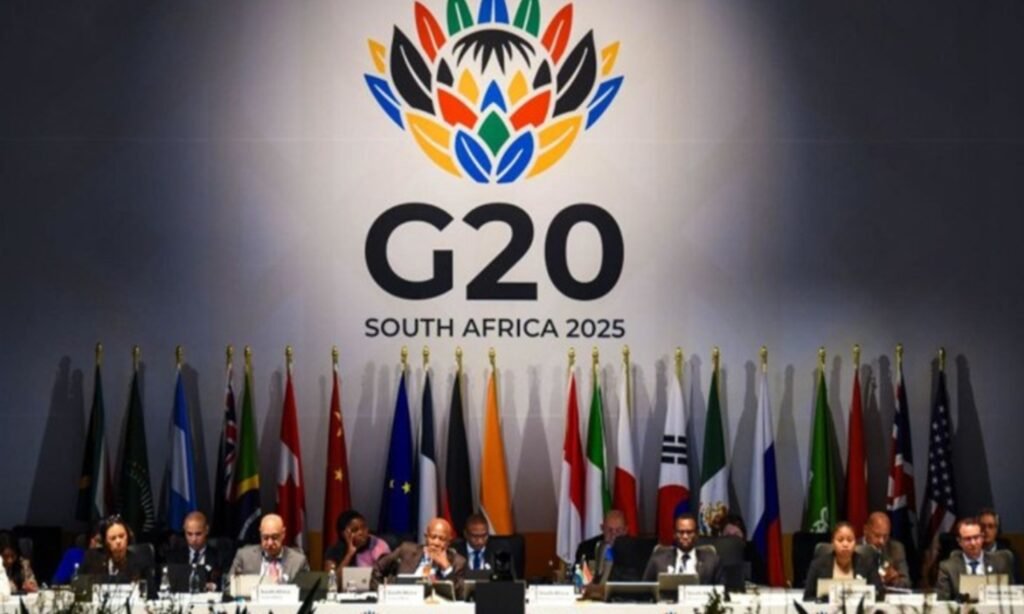
ACCOMPANYING STATEMENT ON THE RELEASE OF THE G20 ACWG 2025 REPORTS
The African Center for Governance, Asset Recovery, and Sustainable Development is pleased to announce the release of critical technical reports, developed under the G20 Anti-Corruption Working Group (ACWG) 2025, led by the South African Presidency. These publications provide essential insights into global progress in asset recovery, whistleblower protection, and anti-corruption governance – key areas that continue to shape our mission and influence across Africa.
Significantly, the African Center contributed directly to this global process, with our Executive Director, Madam Juliet Ibekaku-Nwagwu, leading the drafting of two flagship reports—on Asset Recovery Capacity-Building and Whistleblower Protection—positioning Africa at the heart of global anti-corruption reforms under the South African G20 Presidency.
Under the leadership of the South African Presidency, these reports reaffirm the G20’s commitment to strengthening the global anti-corruption architecture; advancing asset recovery; enhancing whistleblower protection; and driving coordinated international action to close systemic gaps identified across member states. They include:
1. Report on the Impact of Technical Assistance, Capacity-Building, and Knowledge Sharing Initiatives for Asset Recovery
This report provides an in-depth analysis of how countries and international institutions have contributed to asset recovery efforts over the past five years. It identifies major capacity-building initiatives, highlights best practices, outlines persistent challenges, and captures the emerging needs of developing nations, particularly in Africa. The report further provides actionable recommendations to strengthen legal frameworks, operational capacity, cross-border cooperation, and the adoption of digital tools in financial investigations.
2. G20 Accountability Report on Whistleblower Protection 2025
This report assesses the implementation of the 2019 G20 High-Level Principles for the Effective Protection of Whistleblowers across G20 and invited countries. It examines legal structures, reporting channels, confidentiality standards, remedies against retaliation, enforcement mechanisms, and real-world protections. While noting areas of progress, the report underscores significant gaps that remain, especially the need for stronger protection systems, institutional capacity, and resources in developing countries, including across Africa.
3. Compendium: Good Practices in Promoting a Transparent, Ethical, and Accountable Civil Service
This document details frameworks for conflict-of-interest management, integrity systems, disciplinary structures, internal control, lobbying regulation, and merit-based recruitment, highlighting innovations that strengthen public trust and reduce corruption vulnerabilities.
4. Compendium of Good Practices on the Role of Multi-Stakeholders in Preventing and Combating Corruption
For the first time, the G20 systematically outlines how government, civil society, the private sector, academia, youth, and the media can jointly shape and implement national anti-corruption strategies. It provides a roadmap for collaborative governance aligned with UNCAC obligations.
5. High-Level Principles on the Administration of Seized and Confiscated Assets Linked to Corruption
These principles provide global guidance on the transparent management, preservation, and social reuse of seized and confiscated assets, reinforcing international standards under UNCAC and FATF.
6. G20 ACWG 2025 Chair’s Statement
The Chair’s Statement captures the breadth of the ACWG’s work, reaffirming global commitments to the implementation of UNCAC, effective asset recovery, whistleblower protection, and inclusive governance. It also underscores the unique significance of the first-ever G20 Presidency on African soil.
Together, these publications serve as valuable resources for policymakers, civil society organizations, practitioners, researchers, and oversight institutions dedicated to combating corruption, improving asset recovery frameworks, and safeguarding individuals who speak up against wrongdoing. We encourage all readers and stakeholders to download and study the full reports for a deeper understanding of the findings and their implications for Africa and the global anti-corruption agenda.
The African Center remains committed to supporting national, regional, and global efforts to combat corruption, improve asset recovery, and build governance systems that deliver for citizens.